
Shipping to the stores: the timeline nobody mentions
Code complete is not live. Google Play enforces a 14-day wait for new personal accounts, and most people find out on the last day.
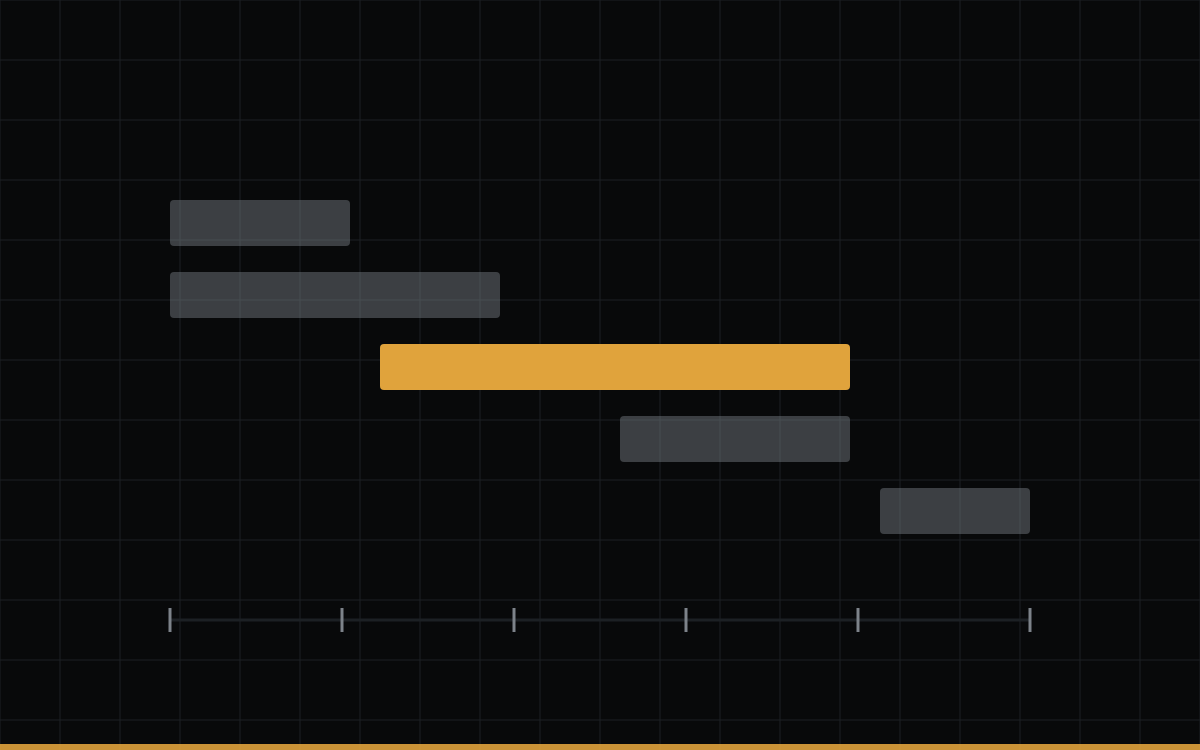
The app is finished, tested, everyone is happy. "Let's publish tomorrow."
You cannot. Getting into a store is not an upload, it is a process — and the schedule is set by the stores' rules, not by your code.
Google Play: fourteen mandatory days
This is the one that catches people out.
Personal developer accounts created after 13 November 2023 must run a closed test before an app can go to production:
- At least 12 testers
- 14 continuous days of participation
- Only then can you apply for production access
Organisation accounts are exempt.
So if your account is new and personal, the app could be finished today and still be two weeks from launch. Finding 12 people and keeping them engaged for 14 days is its own piece of work.
What to do: open the developer account in week one of the project, not at the end. Run the testing track in parallel with development.
Apple: verification and review
Apple is easier, but not zero:
- Developer Program membership is annual and verification can take days
- A company account needs a D-U-N-S number, which is a separate process
- Review usually takes 24 to 48 hours
Rejections are common, and the frequent reasons are not technical: a missing privacy policy, no test account provided, or a judgement that the app is "just a wrapper around a website".
Requirements that have nothing to do with code
Both stores want these before you can submit:
- A privacy policy URL. A live one. If the app collects data you also have to declare what it collects.
- Screenshots. At specific sizes, for several device classes.
- An app icon. Full bleed, no transparency.
- Description and keywords. The only thing that makes you findable in store search.
- A test account. If your app has a login, the reviewer needs working credentials. Without them you get rejected.
Left until after development, these add another week.
A realistic plan
Roughly, for a project starting from scratch:
| Stage | When it should start |
|---|---|
| Developer accounts | Week one |
| Privacy policy, store copy | Mid-development |
| Play closed testing | As soon as the app is testable |
| Apple submission | At code freeze |
| Launch | When Play testing completes |
The key idea: store processes should run alongside development, not after it. Otherwise the timeline stretches at the most frustrating possible moment — when everything is ready.
And it does not stop at launch
The first release is a milestone, not a finish line. Operating system releases, store policy changes and mandatory SDK updates will keep pulling you back to the table. That is a separate post.
We treat store account setup, release management and the submission process as part of the job. We do not hand over the code and say "the rest is yours", because that is exactly where we have seen projects stall.